
-
Sale
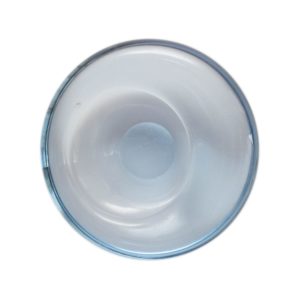

Little Akva Askebæger bowl by Per Lütken
Glass & Ceramics, Home Accessories, Kitchenware & Tableware, Special DiscountsAqua bowl designed by Per Lütken for Holmegaard. This model is part of the Akva series, which was a huge success and remained in production for more than two decades between 1953 and 1974. Signed and identified on the bottom, “HOLMEGAARD PL”. Also on bottom has the production number, 15737. Has a small chip on the rim and some age-related marks. However, all in all it is in a good vintage condition. A rare piece made from hand-blown crystal (just a small part of this series was made from crystal and not from glass). The Akva series includes items sold under different trade marks and line names: Askebaeger, Dukling, Fiona, Hellas, Lysestage, Menuet, Rondo, Selandia, Thule, Umanak, Surf etc.35 €35 € -
Sold out


Signed Daum Nancy crystal ashtray from the 1960s
Sold ItemsSpectacular crystal ashtray signed by Daum Nancy and made in France, in the 1960s. The translucent emerald color and the flower-shaped line give this piece a refined, elegant and discreet look. It’s signed on the bottom "Daun Nancy" – Cross of Lorraine – "France", in the typical manner of this famous manufacturer. Also retains the label of the first crystal shop that sold it: "Cristallerie Moser-Millot Paris 30 Bd. Des Italiens". Is in a very good condition, with minimal age related signs. Daum Nancy rose to prominence during the Art Nouveau and Art Deco period, and captured the imagination of collectors all over the world. Let us take a quick look at the interesting events that shaped the company. Jean Daum was a notary from Bitche who had lent some money to the proprietors of a glass factory in Nancy, the capital town of the French region of Lorraine. The glassworks was then named "Verrerie Sainte Catherine". In 1878, Daum took over the factory when its erstwhile owners were unable to pay off their debt and renamed it "Verrerie de Nancy". The factory initially produced glassware such as drinking glasses and pitchers and then ventured into artistic glass manufacturing in 1891. After Daum’s death in 1885, his son Auguste Daum took over the control of the company in the year 1890. The Daum brothers exhibited their "Handsome Tavern Glass" at the Paris International Exhibition in 1889. This event was of utmost significance because it marked the birth of the French Art Nouveau movement. Daum received his first "Grand Prix" in 1900 because by then his factory had established its name as a producer of high quality glass. By 1903, Daum had started making vitrified vases. These vases are singularly responsible for the kind of fame the company acquired in the early 1900s. In 1906 Daum began the manufacture of pâte-de-verre, a glass-making technique first used over five thousand years ago in the early world. In order to understand the collector’s interest in Daum Nancy objects, one must realize that this company has shaped itself up to become a producer of glass art objects and not simple glassworks. It pioneered and revolutionized old techniques by working with colour powders, acids, enamel and fluorine hydrogen. From the early 1900s emphasis was placed upon ornamental motifs in naturalistic forms. When Galle died in 1904, the Daum brothers became the leaders in the field of decorative glass and their dominance lasted for one productive, golden decade. Source: artnewsnviews.com120 €120 €

Hand blown crystal
Home » Hand blown crystal