
Wooden roll top jewelry box
90 €
Beautiful wooden roll top jewelry box made in Germany, in the 1940s. It has lots of compartments inside so that the jewels can be placed in order. The dividers are intact and the roll top opens and closes smoothly. The roller retracts concurrently with the opening of the bottom drawer. The box is in very good vintage condition.
Out of stock

You may also like
-
Sold out

Art Deco mantel clock in wood case
Sold ItemsBeautiful Art Deco mantel clock made in the 1950s. It features a very elegant wood case and a precise geometric game. It is in very good condition with only small age-related traces.100 €
Additional information
| Design Period | 1940-1949 |
|---|---|
| Country of Origin | |
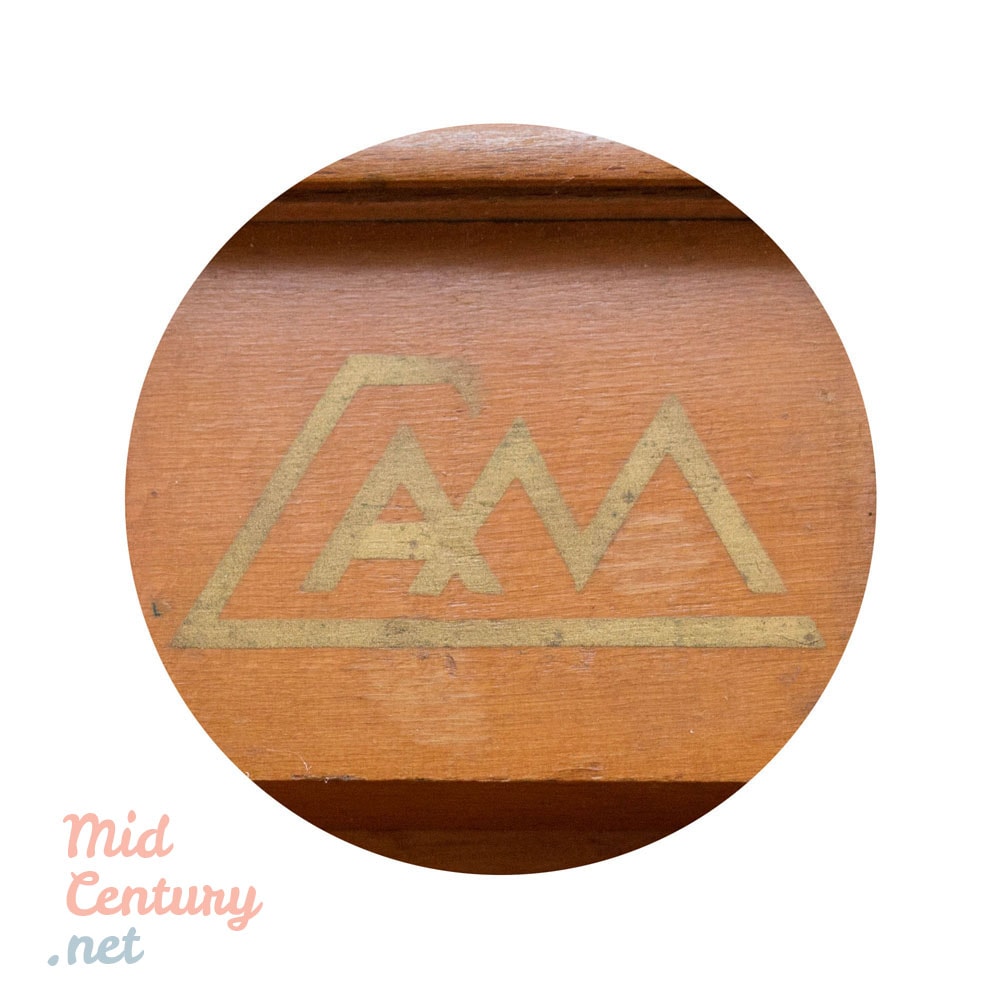
| Identifying Marks | Brand Logo |
| Restoration, Damages | Minor wear consistent with age and use |
| Material(s) | |
| Color(s) | |
| Weight | 800 g |
| Dimensions (H x W x D) | 5,5 x 14 x 27 cm |
| Duties Notice | If your delivery address is not in the European Union, Iceland, Liechtenstein, Norway, or Switzerland, please be advised that import duty is not included in the prices you see online |
Product Enquiry
About Mid-Century
Box (plural: boxes) describes a variety of containers and receptacles for permanent use as storage, or for temporary use, often for transporting contents.
Boxes may be made of durable materials such as wood or metal, or of corrugated fiberboard, paperboard, or other non-durable materials. The size may vary from very small (e.g., a matchbox) to the size of a large appliance. A corrugated box is a very common shipping container. When no specific shape is described, a box of rectangular cross-section with all sides flat may be expected, but a box may have a horizontal cross section that is square, elongated, round or oval; sloped or domed top surfaces, or non-vertical sides.
A decorative or storage box may be opened by raising, pulling, sliding or removing the lid, which may be hinged and/or fastened by a catch, clasp, or lock.
Boxes for storing various items in can often be very decorative, as they are intended for permanent use and sometimes are put on display in certain locations.
A jewelry (AmE) or jewellery (BrE) box, is a box for trinkets or jewels. It can take a very modest form with paper covering and lining, covered in leather and lined with satin, or be larger and more highly decorated.
A humidor is a special box for storing cigars at the proper humidity, by means of absorbent materials that retain and moderate moisture coming from the cigars. Powered boxes can also maintain the right temperature.
A “strong box” or safe, is a secure lockable box for storing money or other valuable items. The term “strong box” is sometimes used for safes that are no longer portable boxes but are installed in a wall or floor for increased security.
Jewellery or jewelry consists of small decorative items worn for personal adornment, such as brooches, rings, necklaces, earrings, and bracelets. Jewellery may be attached to the body or the clothes, and the term is restricted to durable ornaments, excluding flowers for example. For many centuries metal, often combined with gemstones, has been the normal material for jewellery, but other materials such as shells and other plant materials may be used. It is one of the oldest type of archaeological artefact – with 100,000-year-old beads made from Nassarius shells thought to be the oldest known jewellery. The basic forms of jewellery vary between cultures but are often extremely long-lived; in European cultures the most common forms of jewellery listed above have persisted since ancient times, while other forms such as adornments for the nose or ankle, important in other cultures, are much less common. Historically, the most widespread influence on jewellery in terms of design and style have come from Asia.
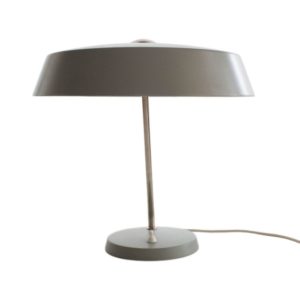
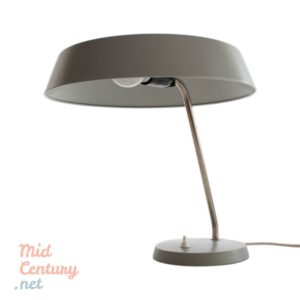
Gray desk lamp from the 1950s
Sold Items

Pair of French walnut chairs
Sold Items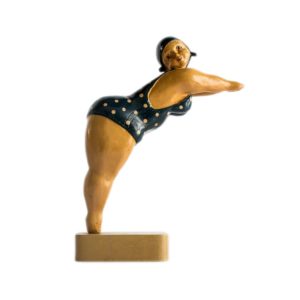
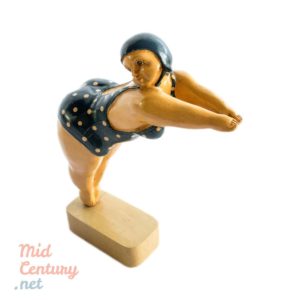
The Swimmer (by Bruka Design)
Sold Items