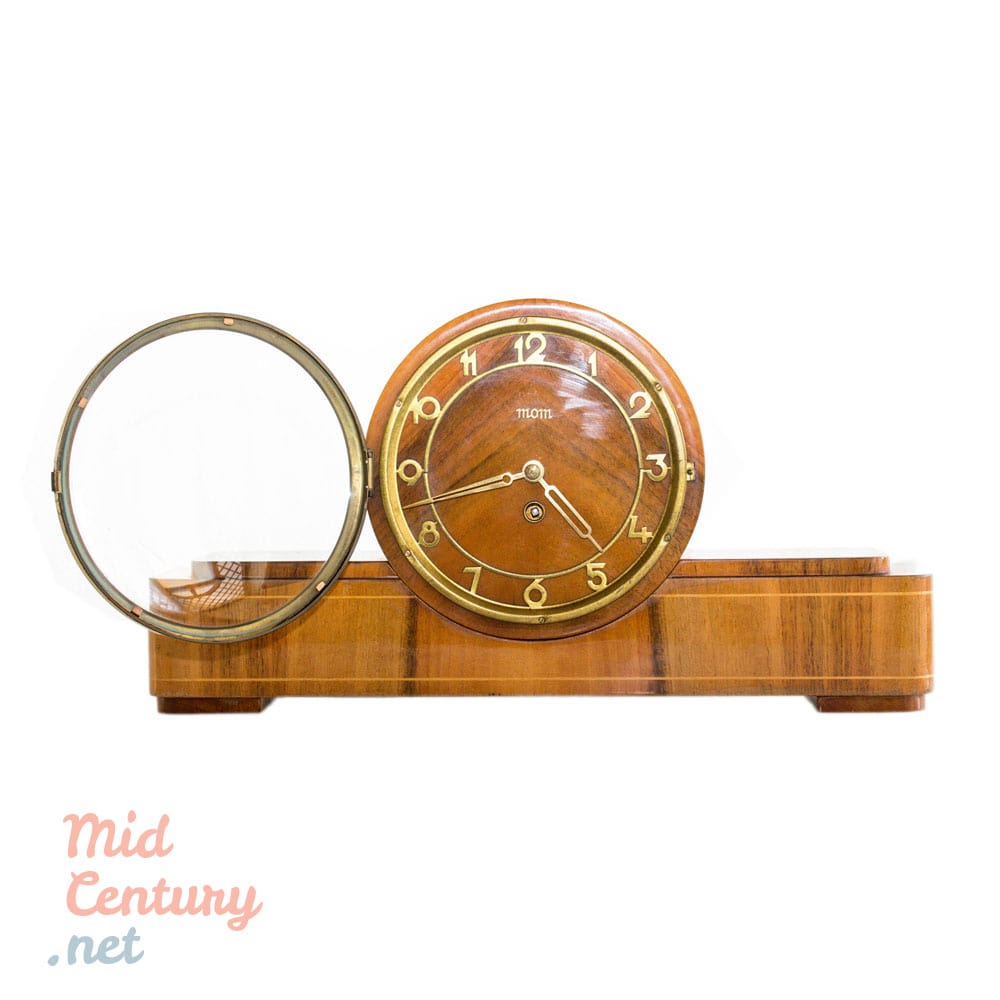

Beautiful Mom mantel clock in wooden case
100 €
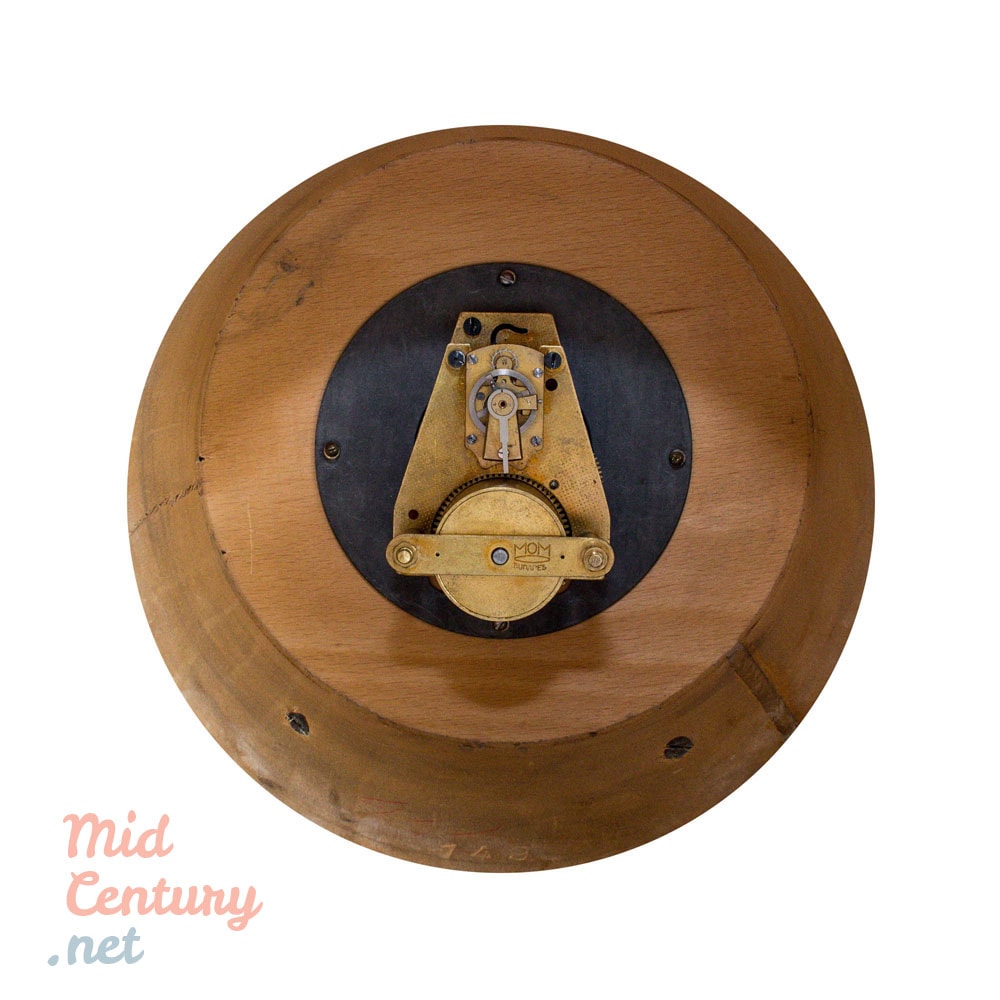
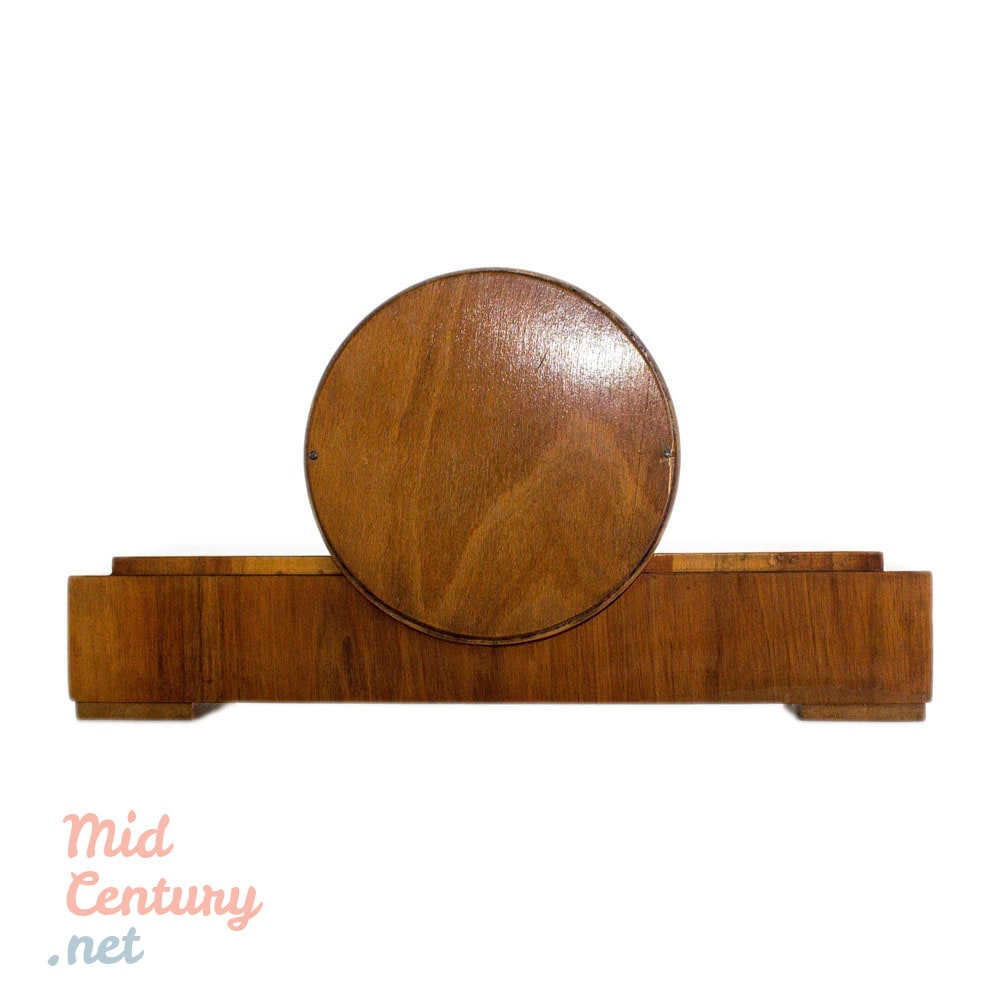
Beautiful Mom mantel clock made in the 1940s in Hungary. It features a very elegant varnished wood case. This clock can give a sophisticated touch to any room. This is a mechanical clock and has to be manually winded once a week to operate. It is in very good condition with only small age-related traces.
Out of stock

You may also like
-
Sold out

Art Deco mantel clock in wood case
Sold ItemsBeautiful Art Deco mantel clock made in the 1950s. It features a very elegant wood case and a precise geometric game. It is in very good condition with only small age-related traces.100 €
Additional information
| Maker | |
|---|---|
| Design Period | 1940-1949 |
| Country of Origin | |
| Identifying Marks | Brand Logo |
| Restoration, Damages | Wear consistent with age and use |
| Material(s) | |
| Color(s) | |
| Weight | 2600 g |
| Dimensions (H x W x D) | 22 x 44 x 13 cm |
| Duties Notice | If your delivery address is not in the European Union, Iceland, Liechtenstein, Norway, or Switzerland, please be advised that import duty is not included in the prices you see online |
Product Enquiry
About Mid-Century
Mantel clocks — or shelf clocks — are relatively small house clocks traditionally placed on the shelf, or mantel, above the fireplace. The form, first developed in France in the 1750s, can be distinguished from earlier chamber clocks of similar size due to a lack of carrying handles.
These clocks are often highly ornate, decorative works. They are most frequently constructed from any combination of ormolu, porcelain, and wood. One of the most common and valued types of mantel clocks are the French Empire-style timepieces.
Simon Willard’s Shelf Clock (Half Clock, Massachusetts Shelf Clock) was a relatively economical clock which was produced by the celebrated Simon Willard’s Roxbury Street workshop, in Boston, Massachusetts, around the first decades of the 19th century. Right after inventing the Banjo clock, Simon Willard brought the design further, designing the similar Massachusetts Shelf Clock which was related to the traditional Bracket clocks. Simon’s new creation ran for eight days.
In contrast to wall clocks, whose movements were attached to the back board, the shelf clock had its movement supported by a seat board. Amid the 1790s, in Boston Simon Willard began selling other standardized shelf clocks. Indeed, it looked like a standard tall clock whose hood and base were directly conjoined and whose body was missing. These models included both a second hand and a calendar dial.
Simon Willard’s shelf clocks were weight-driven and some models had an extended base for the weight so they achieved a one-week running period. Also, they had a pinwheel escapement. Their strike mechanism was the rack and snail. The pendulum length could be adjusted through a hole in the clock face at the 12 o’clock position, so it wasn’t necessary to open the case.


Imposing coffee table made of teak
Sold Items

Pair of chairs manufactured in France
Sold Items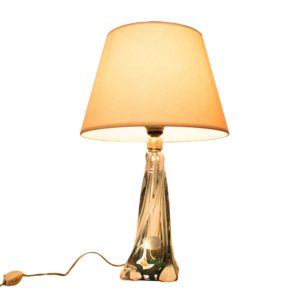

Spectacular Val St Lambert crystal lamp
Sold Items